


Cape May Light
(Cape May, New Jersey)
Craft brewers and drinkers have embraced lagers wholeheartedly over the past few years, seeking beers that effortlessly refresh while retaining flavorful intrigue. Cape May nails that assignment, brewing an American light lager with all the ease the style promises—and just a touch of added roundness. A cap of persistent white foam springboards aromas of cornflakes and citrus zest (or what Joe describes as “lime rice in a tortilla.”) The malts taste just a bit doughier—not at all heavy—on the tongue, delivering just a smidge more body than a typical entry in this category. Fine bitterness and a pleasing dryness close the sip with a bow, immediately inviting another. Cape May Light punches above its weight, offering more citrus and a smoother texture than we’d expect from 4.2 percent ABV light lager, while still maintaining all the approachability. —K.B.
Pinthouse Gold Steps
(Austin, Texas)
This Austin powerhouse is no stranger to our best list (witness their win for Mosaic Takedown last year), and the 99 that Gold Steps scored in our IPA issue earned it a place in our discussion. Not bad for a one-off recipe submitted for review in a crowler.
We hear this was the first Pinthouse recipe designed by Ryan Elam, who joined the brewery after nearly five years with Other Half. And—like the Mosaic Takedown recipe designed by Trevor Kelly, Jacob Passey, and Tom Fischer—it’s further evidence of their deep brewing bench.
It’s difficult to deliver full-volume fruit character in a hazy, low-ABV beer that can’t use sweetness as an amplifier, but the rich (yet properly dry) body holds the ranging notes—ginger crisp, lime, mimosa, lemon cake, berries—in a bit of vanilla-tinged suspension. The result is a beer that showcases great hops in a stunning way while embracing drinkability. As Kate said when we tasted it, “Really modern, really now.” —J.B.
American Solera Nine Lives
(Tulsa, Oklahoma)
The fact that these persistent purveyors of big flavors were in this spot five years ago for something totally different—the spontaneously fermented Coolship Roadtrip—says enough about the breadth and length of their chops. Just to underscore that point, anyway, their other high scorers in the past few years have included a triple IPA, a foeder-aged lager, a banana-berry smoothie sour, and a rum-barrel-aged hard seltzer. This time, they’re steering us into the deepest darknesses with a thick, leggy stout aged 40 months in Heaven Hill wheated bourbon barrels. The aroma evokes a juicy bonbon of tangy prune and dried cherry, toasted walnut, darkest cocoa—all injected with just enough whiskey. Hefty and broad on the palate, subtle layers of fruit and roast nearly balance the sweetness—the burnt edge of a marshmallow? huckleberry? a wisp of sweet tobacco?—inviting you to go diving back in to unlock further mysteries. We found it incredibly difficult to stop sipping, investigating, and discussing. —J.S.
Cerebral Access Request
(Denver)
Early-days pedantic fretting about whether cold IPA is actually IPL has evolved into whether it’s actually West Coast IPA… but we really don’t give a damn what you call it when y’all keep making these bangers for us to drink. This one is as modern as it gets, both in form and flavor: It’s lean, trim, and dry, with just enough honey-like sweetness to give the hops a brief palate playground on the way to a quick finish. Meanwhile, the hops reach for Day-Glo brightness via passion fruit, lemon, kiwi, and pineapple, all deepened by the earthier, funkier notes of cannabis, mint, green tea, and papaya. Cerebral had other top scorers this year—the Parallax Effect pilsner, and the barrel-aged stout Here Be Monsters—but this one edges them out by combining sleek pilsner drinkability with luminous hop depth. —J.S.
Fair Isle Knitting Circle Season 6 Batch B
(Seattle)
We’re always rooting for oak-aged, mixed-culture beers—and for the brewers who defy the market by embracing them—and Fair Isle has been one of our favorites to watch since opening nearly six years ago. We’ve greatly enjoyed previous iterations of Knitting Circle, and we’d like to see Fair Isle’s steady climb to our highest pedestal as evidence of their dedication to refinement. That’s certainly the case with this beer, originally brewed in 2022 but layered ever since with time in gin barrels plus additions of fireweed, foraged fir tips, and a house-made syrup made from Douglas fir cones. In conjunction with their house culture, the effect is utterly beguiling—and if the idea was to capture the flavor of the Cascades, then now we know the Cascades are a cocktail of semidry riesling, candied lime peels, lemony menthol, and white pepper. Punchy and tart yet delicate, dry, and deeply complex, their foraged flavors have sent us foraging for a deeper lexicon. —J.S.
Wayward Lane Terraform Fresh Hop Edition 2025
(Schoharie, New York)
Capturing the essence of fresh hops in a beer that stands up to today’s expectations for flavor saturation and intensity poses a particular challenge: Dry hop too hard, and you blow out that delicate fresh-hop character; play it too light, and you lose edge definition and contrast.
This fresh-hop beer from East Coasters Wayward Lane threads the needle deftly, offering spicy melon and mango salad in the aroma, voluminous orange oil with a bit of berry, stone fruit, clean petrol, and white scallion in the flavor, and a touch of old-school pine character in the finish. Just as the juicer fruit notes start to feel saturated, a light pithiness with a faint touch of astringency reins it back in—texture and flavor intertwine.
The fact that the brewery is nearly 3,000 miles away from the farm that grew the Strata isn’t lost on us—but when tasting it blind, none of that matters. From the engaging aroma to the elegant structure and refined balance in flavor, it captures the essence of hops from fresh cone to dried pellet. —J.B.
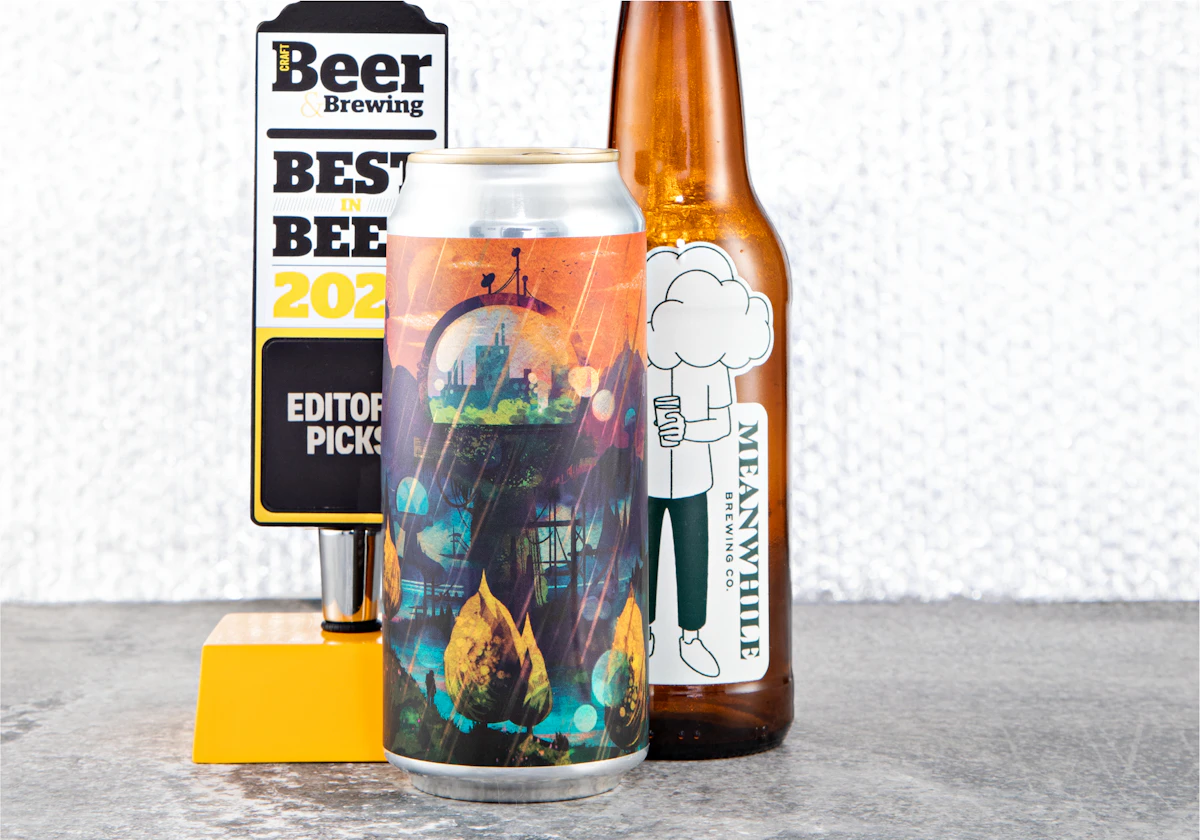
Meanwhile Japanese Lager
(Austin)
As we suggested last year when pFriem’s won a spot here, American brewers have decided that Japanese-style lagers should be about flavor. This one is part of a rotating series of lagers and—according to a Meanwhile salesperson at the Great American Beer Festival—this is one that customers ask for well outside of its April–June window. Our judges would be right there with them, having scored this a 98 back in April. “Clean, crisp, and dry, with soft complexity and delicate notes of dried rose petals and green tea,” they wrote. “Very spring-like—flowers budding on young limbs with a pleasant woody note.” Sorachi hops amplify the fermentation character, blending zesty notes that become more apparent retronasal. Although the bitterness is relatively low, it packs a quick, clean punch. (Bonus tip, if you go: Meanwhile has been known to infuse this lager with yuzu, adding a zesty twist—for taproom customers only.) —S.H.
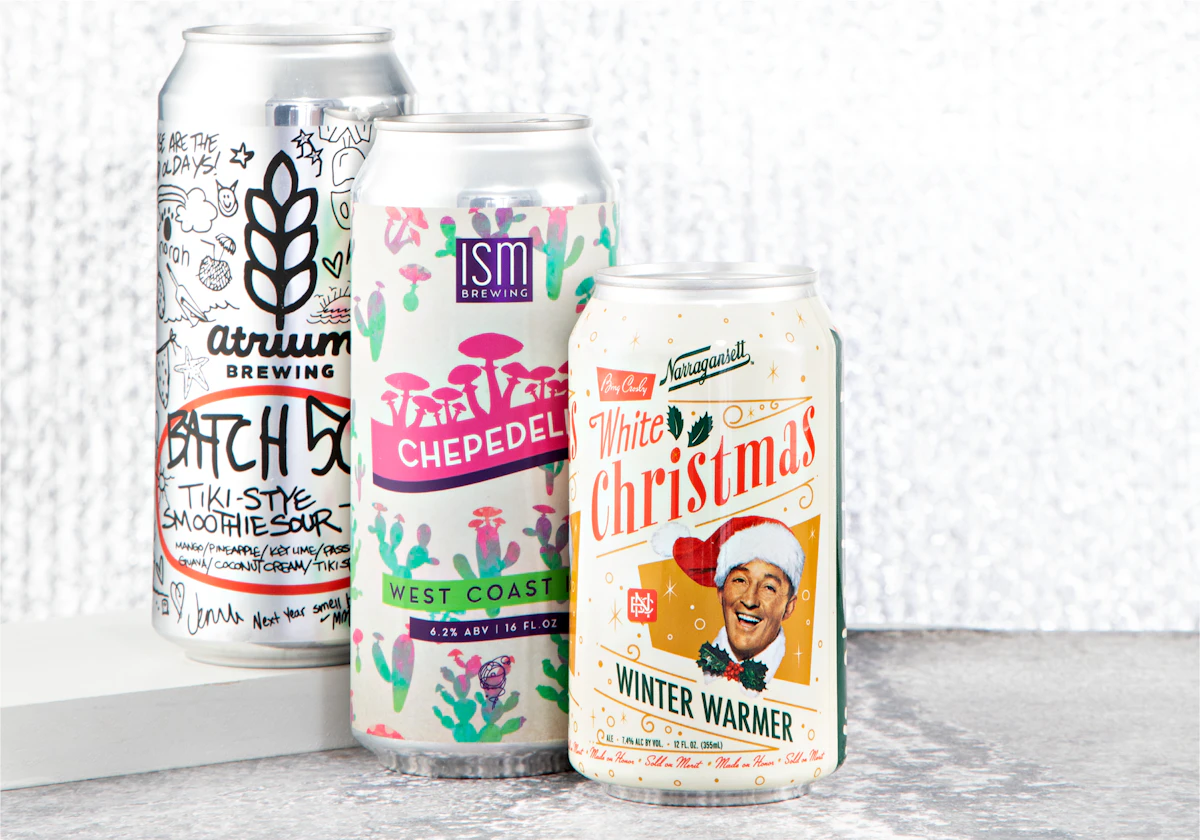
Atrium Batch 500
(Louisville, Kentucky)
Our review panelists aren’t generally inclined toward thick, fruit puree–heavy beers, which tend more toward crowd-pleasing saccharine pop than critical listening. But every now and then a gem comes along that bridges both worlds. With Batch 500, Louisville’s Atrium flexes their maximalist tendency, and the wall of layered tropical fruit with thoughtful cocktail spicing finds nuance and artfulness despite the volume cranked to 11. Fruit is the star, with pineapple and coconut doing the heavy lifting alongside bits of almond and sherbet. Earthy carrot-skin and ginger notes creep in, but the sweetness works in context to balance the acidity with these thoughtful spicy counterpoints. The result is something far more drinkable than it might seem on paper, approached with the soul of a mixologist. —J.B.
ISM Brewing Chepedelic
(Long Beach, California)
Let’s be clear about the chronology: This was not a beer that our blind panel reviewed earlier this year. However, the ISM team submitted some for our Best in Beer judging—surely from the same batch they sent to the Great American Beer Festival—and we loved it, and we unanimously agreed it was in our Best 20. Sixteen days later, it won gold in the New Zealand IPA category at GABF. We take that as further evidence that those judges down in Denver have excellent taste. We also see a pattern: Technically excellent IPAs with simple, familiar flavors can succeed commercially—but to win at the table, it helps to have all that precision and drinkability plus distinctive, hop-driven depth. With Chepedelic, the brighter side of lemon-lime shares bandwidth with sweet woodruff–like herbs and dark berries, stone fruit, chopped white onion, and orange oil. It’s glittery enough and just bitter enough, with a body that gives the hops a space to be expressive. It’s the sort of beer, as Stan says, “where the intention is showing.” And the intention matches the execution. —J.S.
Narragansett White Christmas Winter Warmer
(Providence, Rhode Island)
We love Sierra Nevada Celebration as much as anyone, and IPA still sells, so we don’t think less of any brewer who releases yet another hoppy riff as a snowy seasonal. But call us nostalgic for the winter warmers of yore—and this ale belts out nostalgia like a crooner, from Bing Crosby on the can through the fruit and spice (cherry, orange peel, ginger) to its provenance from a 135-year-old legacy brewery. It’s the kind of beer we’d grab off the shelf in December without hesitation, knowing from long experience that the liquid is unlikely to meet hopes stoked by such delightful setup. That’s the beauty of blind tasting: Our judges hadn’t heard the sales pitch when they reveled in its flavors: an after-hours office party of fresh-baked pie crust, dried fruit, and orange marmalade, gentle ginger dancing tipsily with balancing bitterness; a kiss of alcohol warmth. It brings fun and buoyancy to the festivities, making the case for reviving a richer kind of brew to sip at those piano-side sing-alongs. —J.S.
Fast Fashion Crop Top
(Seattle)
Here’s a thing that happens sometimes: A brewery better known for plush, hop-forward creations sends us a lean, laced-up lager and wins. A few of Fast Fashion’s hazy IPAs were among our favorite things we drank all year—drinking Hot Pizza at the brewery in September was a joy—and yet the beer that conquered the table was this utterly professional, beautifully balanced pilsner. Crop Top takes the sunny southern route, embracing Bavarian balance and delicate hop-loveliness—herbal, leafy, floral, minty—with a soft and pure milk-bread malt structure. Subtle pome-fruit esters and a soft, finely textured mouthfeel round out the class. We’re openly jealous of the Seattleites who come to SoDo to crush kegs of this before Mariners games. —J.S.
All Access subscribers: click for the scaled Fast Fashion Crop Top recipe!
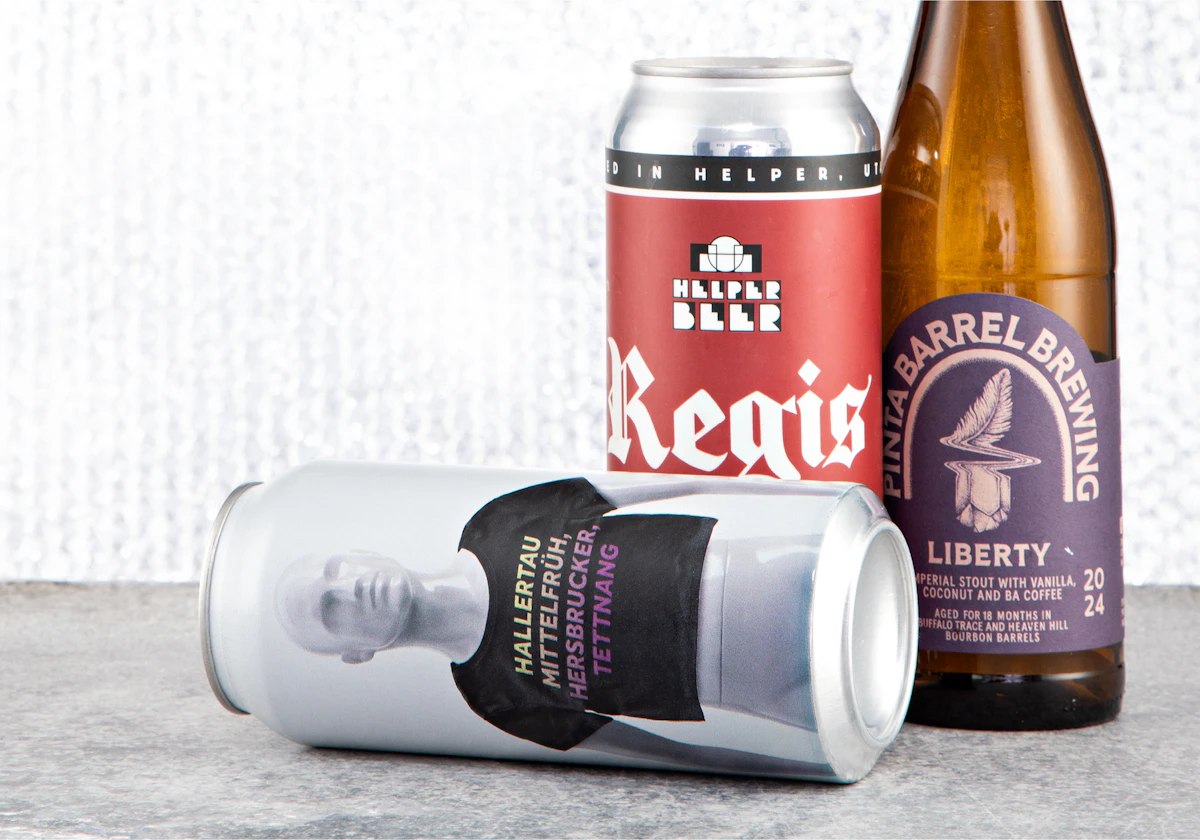
Helper Beer Regis
(Helper, Utah)
It’s been barely two years since Jaron and Amy Anderson opened Helper in its namesake town—population 2,112, more than 100 miles southeast of Salt Lake City—and they just grabbed GABF gold for their German-style pilsner, Schloss Tor. Kevin Templin couldn’t have been surprised: His nickname for Anderson—who brewed for Templin at Red Rock and Templin Family—is “Jarontee” because he’s a guaranteed winner. Our own judges knew the Andersons were on to something last April, scoring Regis Select higher than Templin Granary Kellerbier, one of our Best 20 Beers in 2023. They had the best compliments a drinker can pay to a helles: “unassuming, simple, balanced, and delightful.” The beer’s cracker-like malt and floral, lightly woody hops at the outset become more on second pass, and beyond—like opening a mixed bag of bagels, when a rush of aromas turns into a single flavor. Yes, it tastes German, but to paraphrase Kate, it also sticks to the tongue in a way that feels American. —S.H.
Pinta Barrel Liberty
(Wieprz, Poland)
Scan the top 50 beers in the world on Untappd, and you’ll find a strong correlation with vanilla and coconut—but it takes deft hands to transform these ingredients into something special. Polish craft-beer powerhouse Pinta Barrel has done just that with this top-scoring dessert stout, rated a stellar 98 by our blind panel.
The key is managing the ingredient-amplified perception of sweetness while boosting body—silky mouthfeel is virtually obligatory, but over-the-top cloy tends to be a disqualifier. Liberty treads that fine line by laying body on thick with lower carbonation, but pushing back on that decadence with dark chocolate malt notes that don’t get too bitter or roasty. Alcohol heat brings some spice in the finish while the coffee adds a nutty dimension. It’s elegant and indulgent at the same time. —J.B.
Craft Beer & Brewing Magazine® subscribers: click for the scaled Pinta Liberty recipe!
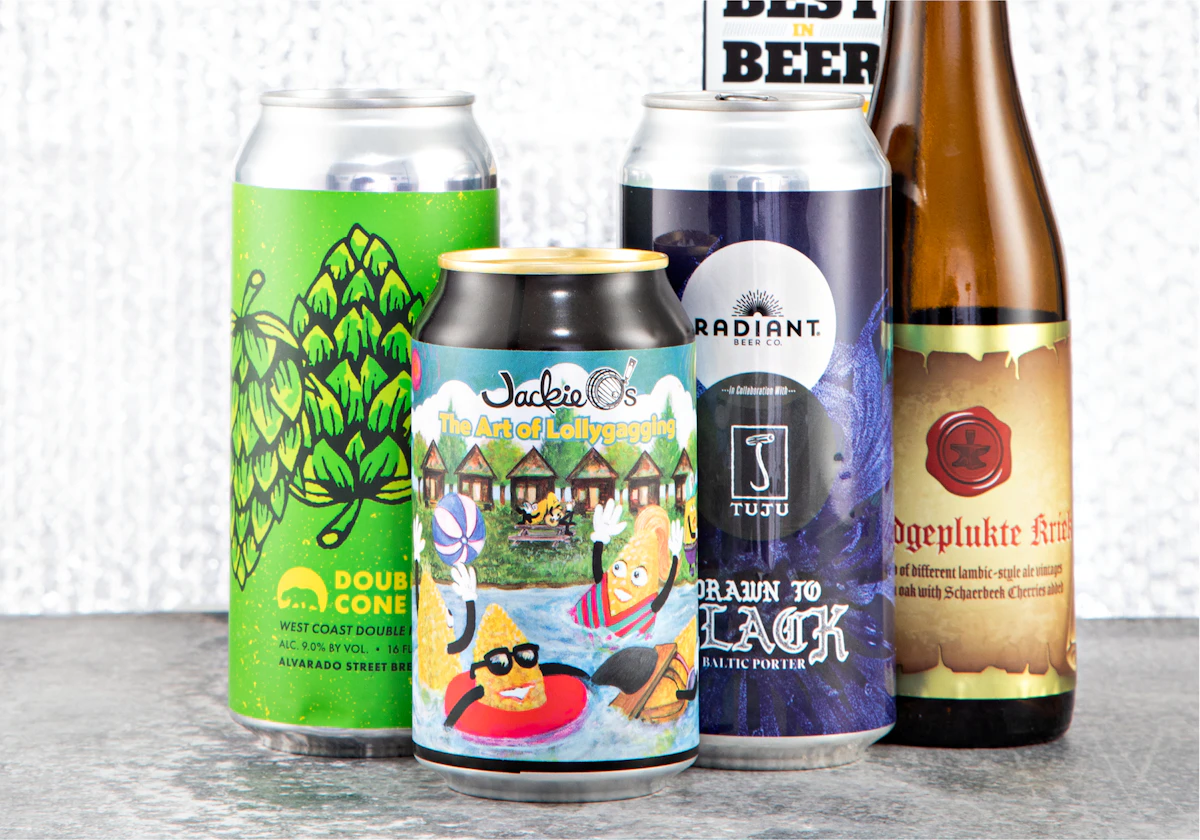
AleSmith Handgeplukt Kriek 2024
(San Diego)
You can read exactly what our blind panel thought about this beer on page 86, but—revisiting with a fresh glass in hand—I’m struck by its deep cherry character, rich with nutty almond in the aroma, its toasted cereals accented by the slightest hint of cinnamon and pie spice. It feels well rounded and culinary, with a bit of pie crust in the flavor, restrained lemony tartness, a faint woody-forest background, and a distant phenolic note that appears in the retronasal. It’s multidimensional and deep without overpowering the beautiful fruit, as the best Belgian krieks are—but in a fascinating turn, this one comes from San Diego. It’s powerful in what it doesn’t try to do—namely, overcompensate for character by pushing aged-hop funk or excessive acidity—but the confidence in the fruit and the blend makes it irresistible. —J.B.
Alvarado Street Double Cone
(Monterey, California)
There are many beers that take time to get to know before you decide you love them, even if it takes just a couple minutes to sip and think it over. But there’s something about a great IPA—after you stick your nose in the glass (ooh, yeah, nice) and then take that first sip (oh, fuck, YES)—that has the ability to quantum-accelerate the time it takes to decide whether this thing is going to please us. With Double Cone, we knew right away. A lot of IPAs big and little these days smell and taste like soft fruity-fruits, and those are nice and all, but we love it when they smell and taste like both fruit and hops. Here, in a golden West Coast double, we’re getting a flavor firehose of fresh green pellets that carry mango, raspberry, peach rings, and ruby-red grapefruit alongside juniper, white pepper, dandelion, and menthol. It delivers Fruit without forgetting her good buddy, Dank. It’s bitter and with enough sweetness to balance, yet it still feels relatively light. Sometimes, you just know. And then the only thing to do is find the words. —J.S.
Radiant Drawn to Black
(Anaheim, California)
If flavors have colors, do they also have temperatures? Mint is cool, after all, and capsaicin is hot. If we focus that idea on the realm of darker malts, we might think of highly roasted or acrid notes as warmer, and of smoother chocolate tones as cooler. Still with me? A great Baltic porter isn’t just big and bold and weighty, it’s also so smooth, round, and polished that it leans into the frostier side of darkness. Radiant’s take—a collab with Tuju of Finland—delivers on those qualities. It also delivers roast and bitterness, which never take over because the cushy cool-leather-sofa body simply envelops them; along the way we get to enjoy comforting notes of toasted nut, dark chocolate, treacle, and fig. My superlative: We tasted a Polish porter that just happened to be brewed near Disneyland. —J.S.
Jackie O’s The Art of Lollygagging
(Athens, Ohio)
Jackie O’s brewed this bourbon barrel–aged barleywine, a collab with North Carolina’s Fonta Flora, using a high percentage of Bloody Butcher corn, a reddish heirloom variety that’s been gaining currency among brewers. Our tasting panel gave it top marks for some classic aromatic notes that include prominent bourbon barrel with vanilla, caramel, almond toffee, and sherry. The broad body is full but not viscous, balancing sweet layers of caramel, treacle, turbinado sugar, Tootsie Roll, and Biscoff cookie with deeper notes of dried fig, graham cracker, and earthy cinnamon. Sneaky tannins and earthy hops softly close the door on the swallow. Stan calls it a “gentle heavyweight.” We can all call it a master class in balance, ingredient choice, and recipe-building. There’s much to contemplate here, and the beer is a comforting, helpful companion to any such inquiries. —K.B.
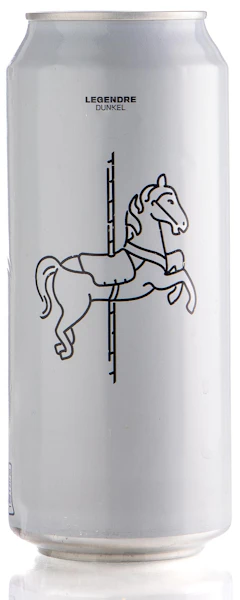
Silo Legendre
(Montreal)
Jean-Phillippe Lalonde has been brewing craft lager for about a decade and a half, starting well before the latest revival made it cool. In the slowly gentrifying garment district of Montreal, he built Silo from the ground up with a focus on brewing, serving, and packaging lagers and ales that are simple, honest, and refined, and that pair well with food. The brewery itself is no-frills, direct-fire, with conical fermentors, but the brewhouse is spotless, and nothing is out of place—much like the beers he brews.
Legendre is a dunkel that showcases that push-pull of flavor and organization. It features a light chestnut aroma and melanoidins that evoke bread crust, while understated malt pulls in light chocolate and caramel—which start slightly sweet but finish dry, as tightly integrated hops do their job in the background. Our blind panelists scored it a 99 on the strength of its remarkable balance, and the way it showcases malt depth while retaining pint-after-pint accessibility is inspiring. From brewhouse to liquid to packaging, Silo’s clean, tightly edited approach allows the smaller glints of creativity and character to flourish. —J.B.
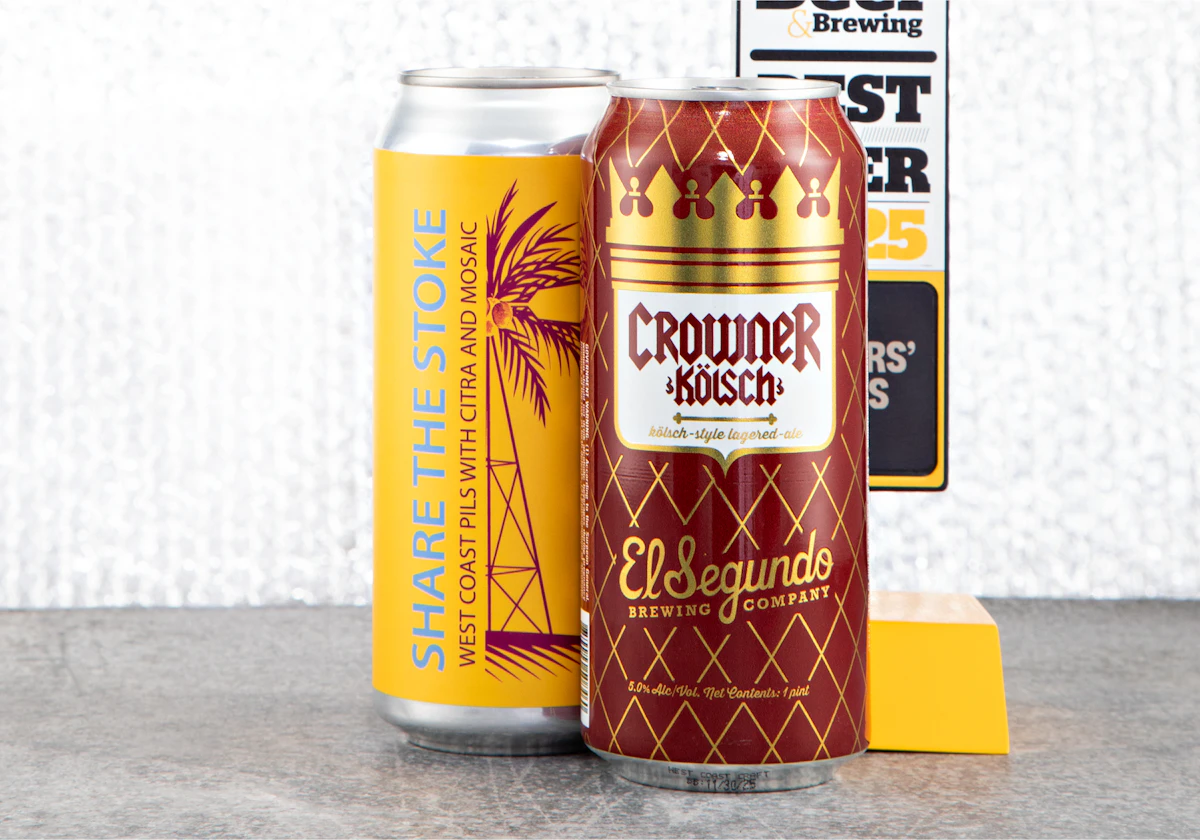
El Segundo Crowner Kölsch
(El Segundo, California)
We might view Kölsch as narrow, stylistically, but it has far more range than most of us realize. Those light, pear ester–driven iterations with white-wine notes can be beautiful, but they’re not the only game in town. Breweries in Köln certainly have more breadth, and El Segundo’s Crowner pulls from that broader canon with a slightly more herbal approach. The esters are there, of course, with a very light, almost banana-like aromatic note; the requisite pear picnics alongside countryside wildflowers and a handful of dried herbs, while the cracker-like malt fills out a bigger middle than most. There’s no minimalism here, with semifull malt flavor supporting the more characterful elements, but the dry finish guarantees the drinkability that’s non-negotiable in the style. Our blind panel scored it a 98, and it remains one of our favorite lagered beers of this year. —J.B.
All Access subscribers: click for the scaled El Segundo Crowner Kölsch recipe!
Corn Coast Share the Stoke
(Lincoln, Nebraska)
Per capita, eastern Nebraska may be one of the winningest locales in the history of our Editors’ Picks; at a municipal level, La Vista, Nebraska, almost certainly is. La Vista’s Kros Strain has earned a spot on our annual list three times, and now Corn Coast—based in Lincoln, but with a second taproom in La Vista—has won its way here. It’s evidence that friendly, spirited competition drives great results for drinkers, as Corn Coast has won three GABF medals in juicy and hazy categories. (Kros Strain and Lumen have each won one in those categories.)
Share the Stoke is their take on West Coast pils, and it finds a modern edge in Citra and Mosaic without abandoning the pils roots of the evolving style. In this iteration, the citrus leans toward lychee and lemon with a bit of stone fruit to soften that citrus edge. Light bitterness does its work, but a well-placed touch of complementary fermentation sulfur offers structure. It’s controlled and confident, showcasing a comfort and familiarity with hops that belies their modest scale. —J.B.
Craft Beer & Brewing Magazine® subscribers: click for the scaled Corn Coast Share the Stoke recipe!